
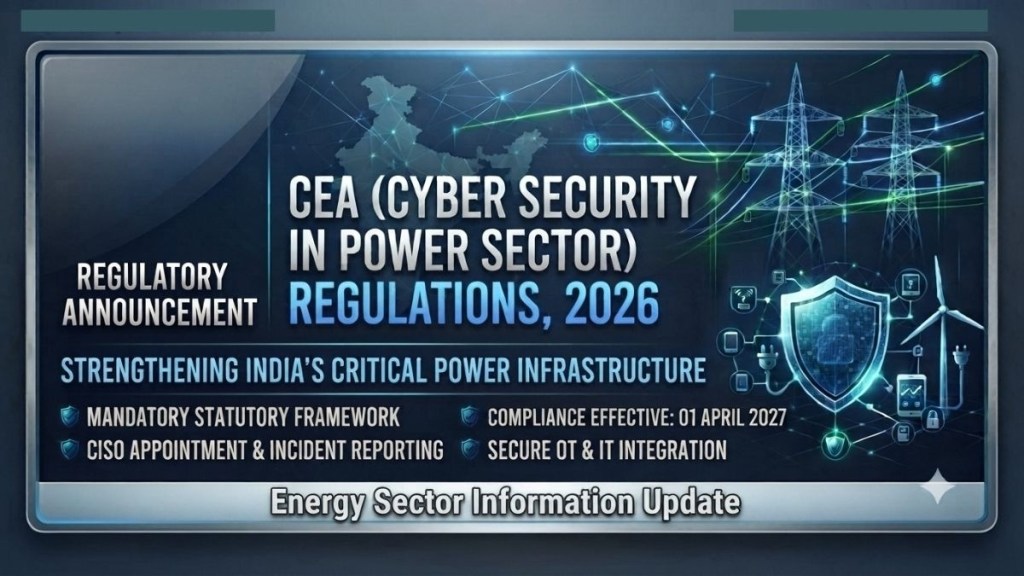
Strengthening India’s Power Infrastructure: An Overview of the CEA Cyber Security Regulations, 2026
In a landmark move to fortify India’s critical energy infrastructure, the Central Electricity Authority (CEA) has officially notified the CEA (Cyber Security in Power Sector) Regulations, 2026. These regulations mark a significant shift from voluntary best practices to a comprehensive, statutory mandate designed to secure the nation’s power ecosystem against evolving digital threats.
Some FAQs on the notification issued:
What the notification is all about
The 2026 Regulations introduce a comprehensive cyber security framework designed to protect the integrity and availability of India’s power grid. By setting clear standards for both Operational Technology (OT) and Information Technology (IT) infrastructure, the regulations aim to secure the entire power system—from generation to distribution—against emerging digital threats.
Purpose of the Regulations
The primary purpose is to institutionalize cyber resilience. As the power sector increasingly relies on interconnected systems, these regulations ensure that critical information infrastructure is shielded from cyber-attacks, unauthorized access, and supply chain vulnerabilities. It is a proactive measure to maintain the stability and reliability of the nation’s electricity supply.
Applicability: Who must implement them?
These regulations apply to a wide range of power sector entities that own, operate, or manage OT infrastructure associated with the interconnected power system, including:
Generating Companies, Captive Generating Plants, and Energy Storage Systems with an installed capacity of 50 MW or more.
Transmission Licensees and Distribution Licensees.
Load Dispatch Centers (National, Regional, and State level).
Power Exchanges and Over-the-Counter (OTC) platforms.
Manufacturers and Suppliers of hardware, firmware, or software associated with the control systems of Distributed Generation Resources (DGRs) owned by prosumers.
Is implementation mandatory?
Yes. These regulations represent a formal statutory mandate. Covered entities are expected to adhere to the framework as part of their operational compliance under the oversight of the CEA.
Roadmap for Implementation
To ensure an orderly transition and facilitate compliance without hindering sectoral growth, the CEA has built in a defined transition period. Industry players are encouraged to utilize this window to conduct gap analyses of their current IT/OT infrastructure and align their internal processes with the new statutory requirements.
A Pillar of Energy Security
In the modern era, cyber security is inseparable from energy security. By mandating rigorous standards for all critical components of the power system, the Ministry of Power and the CEA are treating digital security as an essential layer of national infrastructure protection. This framework is a strategic move to ensure that India’s growth in the power sector remains safe, secure, and resilient.
Official Gazette Notification
Notification Date: July 31, 2026
F. No. (File Number): CEA-HII-91-19/8/2024-Cyber Security Division
Gazette Reference: Published in the Gazette of India: Extraordinary, Part III—Section 4, Number 484, dated July 31, 2026.
Key Takeaways from the Notification
The Central Electricity Authority (Cyber Security in Power Sector) Regulations, 2026, notified on July 31, 2026, represent a foundational shift in how India secures its power infrastructure.
Below are the key points from the official Gazette notification:
1. Objective
To establish a mandatory, statutory framework for cyber security to ensure the safe and secure operation and maintenance of power plants and power lines, leveraging the powers under the Electricity Act, 2003.
2. Applicability
These regulations apply to all entities that own, operate, or manage Operational Technology (OT) infrastructure (and linked IT systems) connected to the interconnected power system, including:
Generation: Generating companies, captive generating plants, and energy storage systems with an installed capacity of 50 MW or more.
Grid Operations: Transmission licensees, distribution licensees, National Load Dispatch Centre (NLDC), Regional Load Dispatch Centers (RLDCs), and State Load Dispatch Centers (SLDCs).
Trading/Exchange: Power exchanges and Over-the-Counter (OTC) platforms.
Supply Chain: Manufacturers and suppliers of hardware, firmware, or software associated with control systems.
Note: Entities with less than 50 MW capacity are encouraged to adopt the “15 Basic Cyber Security Controls for MSMEs” prescribed by CERT-In.
3. Implementation Timeline
Effective Date: The regulations come into full force on April 1, 2027.
Phased Implementation: Specific provisions (relating to certain security audits and operational protocols—Regulations 5(9), 5(24), 5(33), 5(39), 6(2), and 6(7)) will come into effect on dates to be specified by the Authority through separate orders with prior approval from the Central Government.
4. Core Requirements for Entities
The Regulations mandate structural changes and operational discipline, including:
- Institutional Roles: Appointment of a dedicated Chief Information Security Officer (CISO) from senior management.
- Operational Discipline: Requirement for “Critical Systems” (both IT and OT) to be identified and protected, as their failure would adversely impact business operations.
- Supply Chain Transparency: Provision for a “Bill of Materials” (BOM)—a comprehensive inventory of components, sub-components, libraries, and modules used in products/systems to ensure visibility and transparency.
- Incident Response: Integration with CERT-In and the establishment of sector-specific response mechanisms (CERT-Power) to report and mitigate cyber security incidents.
- Business Continuity: Mandatory development of Business Continuity Plans (BCP) to ensure a defined level of service is maintained during security disruptions.
5. Regulatory Status
These are statutory regulations issued under Section 177 of the Electricity Act, 2003. This elevates cyber security from a set of guidelines to a legal obligation, making compliance mandatory for the specified entities.
Reference :
Download the Gazette Notification here :
https://cea.nic.in/wp-content/uploads/notification/2026/08/Cyber_Regulations_Notification.pdf