

Webinar on Carbon Footprint – ISO 14064 – GHG Emissions
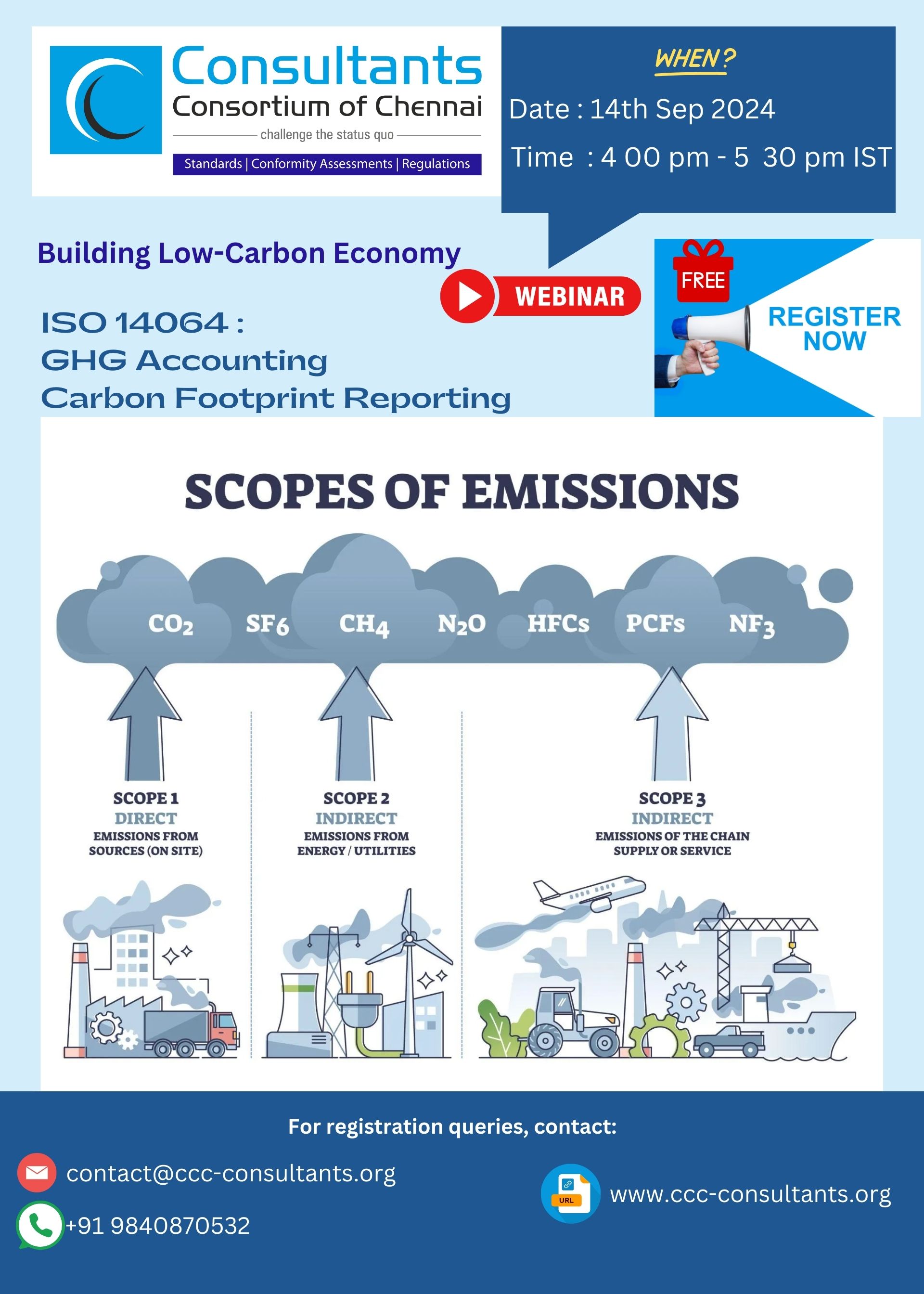
What is ISO 14064?
ISO 14064 is an international standard that provides guidance for organizations to quantify, monitor, report and verify greenhouse gas (GHG) emissions. It consists of three parts:
ISO 14064-1: Specifies principles and requirements at the organizational level for quantification and reporting of GHG emissions and removals. It includes requirements for designing, developing, managing, reporting and verifying a GHG inventory.
ISO 14064-2: Provides guidance at the project level for quantifying, monitoring and reporting GHG emission reductions or removal enhancements from GHG projects.
ISO 14064-3: Specifies principles and requirements for those conducting or managing the validation and verification of GHG assertions. It can be applied to organizational or GHG project quantification.
ISO 14064 is a widely accepted standard that helps organizations credibly measure, report and manage their greenhouse gas emissions and reductions. Adhering to its principles and requirements demonstrates a commitment to transparency and environmental responsibility.
Benefits of implementing ISO 14064 in a Business Entity / Company
Implementing ISO 14064 in a company offers several significant benefits, primarily focused on improving environmental management and enhancing credibility. Here are the main advantages:
• Improved GHG Management: ISO 14064 aids organizations in identifying and quantifying their greenhouse gas (GHG) emissions, allowing for the development of effective action plans to reduce their carbon footprint. This structured approach facilitates ongoing monitoring and measurement of progress over time, which can lead to cost savings through optimized resource and energy use.
• Enhanced Credibility and Transparency: Achieving ISO 14064 certification demonstrates a company’s commitment to addressing climate change. This certification reinforces trust with customers, partners, and investors by providing reliable and transparent environmental declarations. It allows organizations to engage in meaningful dialogue with stakeholders about their environmental impact.
• Access to Green Markets and Financing: Many financial institutions and markets are increasingly requiring companies to meet specific environmental criteria. ISO 14064 certification can be a competitive advantage, enabling access to green financing and markets that prioritize sustainability in their decision-making processes.
• Identification of Risks and Opportunities: The standard helps organizations identify GHG-related risks and opportunities, promoting accountability and informed decision-making throughout the organization. This proactive approach can lead to improved operational efficiency and better preparedness for future regulations.
• Regulatory Compliance: Adhering to ISO 14064 helps companies meet regulatory obligations related to GHG emissions, thereby avoiding potential fines and reputational damage. This compliance is increasingly critical as governments tighten regulations around climate change and emissions reporting.
• Reputation Enhancement: ISO 14064 serves as a clear indicator of a company’s dedication to sustainable practices. This commitment can enhance the company’s image and reputation, particularly among environmentally conscious consumers and stakeholders.
In summary, implementing ISO 14064 not only supports environmental sustainability efforts but also provides tangible business benefits, including improved operational efficiency, enhanced credibility, and better access to financial and market opportunities.
Program Objective :
Objective of this webinar is to guide businesses LEARN more about GHG Emissions, Reducing Carbon Footprints in business, products that businesses make.
Delegates can LEARN about :
• Understanding the Standard: Learn the principles, requirements, and implementation guidelines of the ISO 14064 standard
• Improving GHG Quantification: Learn how to improve the credibility, consistency, and transparency of GHG quantification, monitoring, and reporting
• Developing GHG Management Strategies: Learn how to develop and implement GHG management strategies and plans for an organization
• Tracking GHG Reduction Progress: Learn how to track performance and progress in reducing GHG emissions
• Establishing Boundaries: Learn how to establish organizational and reporting boundaries
• Quantifying GHG Emissions: Learn how to quantify and report on an organization’s GHG emissions
• Recognizing GHG Reduction Projects: Learn how to recognize projects that can reduce or remove GHG emissions
• Verifying and Validating GHG Statements: Learn about the importance of verifying and validating GHG statements and reports
• Assurance Programs, Schemes that are available for GHG Accounting, Reporting across the globe and guidance to businesses on which programs/schemes to choose When.

